

PTTA Panels Manufacturer
Industrial electrical systems require properly engineered panels for power distribution, motor control, protection, and equipment management. PTTA Panels are commonly associated with industrial low-voltage switchgear assemblies used for applications such as power control, distribution, and motor management.
Yuva Solution provides customized panel engineering and manufacturing solutions for PCC, PDB, and MCC Panels, designed according to project requirements, electrical loads, installation conditions, and control requirements. Our solutions are available for industrial and commercial applications across Kolkata, Bihar, Odisha, Jharkhand, Chhattisgarh, and Assam. Important terminology: PTTA is a legacy term from the earlier IEC 60439 framework. The current IEC 61439 series uses design verification and routine verification for low-voltage assemblies. IEC 61439-2 specifically covers power switchgear and controlgear assemblies up to 1,000 V AC or 1,500 V DC within its scope.
What Are PTTA Panels?
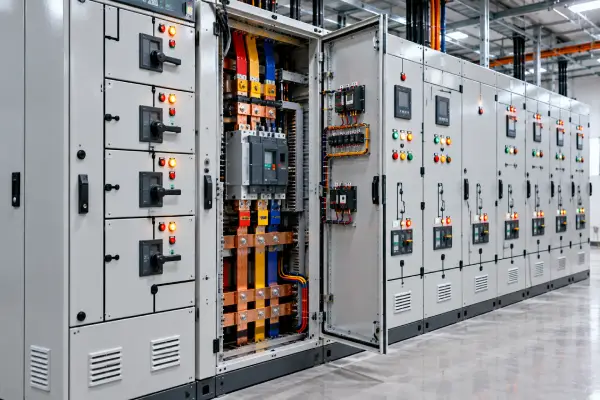
PTTA Panels, traditionally called Partially Type-Tested Assemblies, refer to low-voltage switchgear and controlgear assemblies in which applicable verification was historically carried out for specified characteristics rather than relying on complete type testing of every aspect.
For present-day projects, the more appropriate approach is to specify the assembly against the applicable IEC 61439 requirements and identify the required design verification, routine verification, ratings, forms of separation, IP protection, short-circuit withstand, temperature-rise performance, and other project parameters.
Yuva Solution can engineer panel assemblies around these requirements for:
- Power distribution
- Motor control
- Industrial electrical systems
- Process plants
- Manufacturing facilities
- Utility systems
- Infrastructure projects
PCC Panel – Power Control Centre
A PCC Panel, or Power Control Centre, is primarily used for centralized distribution and control of electrical power within an industrial installation.
It generally receives power from a transformer, generator, utility source, or other suitable incoming supply and distributes it through multiple outgoing feeders.
Main Functions of a PCC Panel
A PCC can perform functions such as:
- Receiving incoming electrical power
- Main power isolation
- Feeder distribution
- Electrical protection
- Metering
- Bus-section control
- Power monitoring
- Downstream load management
PCC panels are commonly used where several large electrical loads need to be supplied from a centralized distribution point.
Typical PCC Components
Depending on the application, a PCC may contain:
- ACBs
- MCCBs
- Switch disconnectors
- Busbars
- Protection relays
- Multifunction meters
- CTs
- Indication lamps
- Control transformers
- Surge protection
- Auxiliary control circuits
- Communication modules
The component selection depends on the incoming supply, connected load, fault level, feeder requirements, and project specifications.
PDB Panel – Power Distribution Board
A PDB, or Power Distribution Board, distributes electrical power from an incoming source to multiple downstream circuits or equipment.
Compared with a large PCC, a PDB is generally focused on distributing power to selected groups of loads rather than acting as the main high-capacity power control centre.
Where PDB Panels Are Used
PDBs can be installed for:
- Industrial buildings
- Commercial facilities
- Production areas
- Utility sections
- Lighting and power distribution
- Equipment areas
- Auxiliary electrical systems
Typical PDB Components
A PDB may include:
- MCCBs
- MCBs
- Isolators
- Fuse units
- Busbars
- Neutral bars
- Earth bars
- Energy meters
- Surge protection devices
- Outgoing feeder protection
- Indication devices
The number and rating of outgoing feeders are selected according to the connected loads.
MCC Panel – Motor Control Centre
An MCC Panel, or Motor Control Centre, is designed for centralized control and protection of motors.
Unlike a PDB, whose primary purpose is power distribution, an MCC is specifically organized around motor feeders and their associated starting, stopping, protection, and control functions.
MCC panels are widely applicable in:
- Manufacturing plants
- Process industries
- Water treatment plants
- Material handling systems
- Chemical plants
- Power plants
- HVAC installations
- Food processing facilities
- Paper and textile industries
Typical MCC Components
Depending on the motor application, an MCC may contain:
- ACB/MCCB incomers
- MCCBs
- Contactors
- Overload relays
- Motor protection breakers
- VFDs
- Soft starters
- Star-delta starters
- DOL starters
- Control relays
- CTs
- Meters
- PLC interfaces
- Terminal blocks
Each motor feeder can be configured according to the motor rating and required starting method.
PCC vs PDB vs MCC – What Is the Difference?
The three panel types serve different primary purposes.
Feature | PCC | PDB | MCC |
Full Form | Power Control Centre | Power Distribution Board | Motor Control Centre |
Primary Function | Centralized power distribution and control | Distribution of power to downstream circuits | Motor control and protection |
Main Loads | Large industrial loads and feeders | General electrical loads | Motors and motor-driven equipment |
Typical Protection | ACB/MCCB and associated protection | MCCB/MCB and feeder protection | MCCB, contactor, overload, VFD, starter |
Motor Control | Possible, but not primary purpose | Generally not the main function | Main function |
Metering | Commonly provided | Application dependent | Feeder/motor dependent |
Typical Location | Main electrical distribution area | Sub-distribution areas | Motor/equipment control area |
Application | Main/central power distribution | Local or secondary distribution | Centralized motor management |
In larger installations, PCC → PDB/MCC → Equipment may form part of the overall electrical distribution architecture.
Technical Specifications of PCC Panels
PCC specifications should be determined from the actual electrical system rather than using one fixed rating for every installation.
Typical parameters include:
Electrical Parameters
- Rated operational voltage: commonly up to 690 V AC depending on design
- Rated insulation voltage: project dependent
- Rated current: selected according to incoming and busbar requirements
- Frequency: commonly 50 Hz in Indian installations
- Short-circuit withstand rating: selected according to the prospective fault level
- Number of incoming feeders: project dependent
- Number of outgoing feeders: project dependent
- Busbar rating: based on calculated load current
- Neutral busbar: as required
- Earth busbar: as required
IEC 61439-2 covers power switchgear and controlgear assemblies within its stated low-voltage scope, including assemblies used for generation, distribution, conversion, and control of electrical energy.
PCC Construction Options
Depending on the project, PCCs can be engineered as:
- Fixed type
- Compartmentalized construction
- Form-based segregated construction
- Single-front arrangement
- Double-front arrangement
- Cable-entry top/bottom configurations
- Indoor installation
- Suitable outdoor configurations
Technical Specifications of PDB Panels
PDB specifications are generally selected according to the downstream load requirements.
Common Parameters
- Rated voltage: typically low-voltage AC applications
- Rated current: based on connected load
- Frequency: generally 50 Hz
- Incoming breaker: MCCB/isolator or suitable device
- Outgoing protection: MCB/MCCB/fuse depending on application
- Busbar material: copper or aluminium according to design
- Neutral arrangement: as required
- Earth bar: provided as required
- Enclosure: suitable for the installation environment
- IP protection: selected according to installation conditions
PDBs can be configured with different numbers of outgoing circuits depending on the electrical distribution requirement.
Technical Specifications of MCC Panels
MCC specifications depend heavily on the motor population and starting methods.
Common MCC Parameters
- Rated voltage: commonly 415 V AC in Indian industrial systems
- Frequency: generally 50 Hz
- Rated busbar current: application dependent
- Short-circuit withstand: based on system fault level
- Motor feeder quantity: project dependent
- Motor feeder rating: selected according to motor capacity
- Starter type: DOL/star-delta/soft starter/VFD
- Incomer: ACB/MCCB
- Control voltage: commonly 24 V DC or other project-specific value
- Communication: as required
- Enclosure protection: based on installation environment
MCC assemblies under IEC 61439-2 require design verification for characteristics such as temperature rise, dielectric properties, short-circuit withstand, protective circuit continuity, clearances/creepage, and mechanical operation.
Busbar Engineering for PTTA-Type Panel Assemblies
Busbars are one of the most important parts of a power panel. Their size and configuration should be calculated according to load current, temperature rise, short-circuit conditions, installation arrangement, and applicable design requirements.
Yuva Solution can engineer panels with suitable:
- Main busbars
- Vertical busbars
- Neutral busbars
- Earth busbars
- Bus couplers
- Feeder busbar arrangements
Copper or aluminium can be considered depending on electrical requirements, thermal performance, mechanical design, cost, and project specifications.
Form of Separation in PCC, PDB & MCC
Internal separation can be used to segregate different functional areas of a panel and provide a more organized arrangement.
Depending on the project specification, assemblies may be designed with suitable forms of separation such as:
- Form 1
- Form 2
- Form 3
- Form 4
Higher levels of segregation can separate busbars, functional units, and terminals to a greater extent. The required form should be selected according to operational, maintenance, and project requirements rather than simply choosing the highest form.
Enclosure & IP Protection
Panel enclosure selection depends on where the assembly will be installed.
Considerations can include:
- Indoor or outdoor installation
- Dust exposure
- Moisture
- Temperature
- Chemical environment
- Mechanical impact
- Cable-entry arrangement
- Maintenance requirements
Appropriate IP protection can be specified according to the actual installation environment.
Electrical Protection & Safety Features
A properly engineered PCC, PDB, or MCC may incorporate several protection and safety features.
Depending on the application, these can include:
- Short-circuit protection
- Overload protection
- Earth-fault protection
- Motor overload protection
- Under/over-voltage monitoring
- Phase-failure protection
- Surge protection
- Door interlocking
- Mechanical interlocking
- Electrical interlocking
- Protective earthing
- Emergency isolation where required
The protection philosophy should be coordinated with the upstream and downstream electrical system.
Manufacturing & Verification of PTTA Panels
Panel manufacturing should be supported by engineering documentation and appropriate verification.
Modern IEC 61439 practice distinguishes between the original manufacturer, responsible for the verified assembly design, and the assembly manufacturer, responsible for constructing the final assembly according to the applicable design.
Relevant verification areas can include:
- Temperature-rise performance
- Dielectric properties
- Short-circuit withstand
- Protective circuit continuity
- Clearances and creepage distances
- Mechanical operation
- Degree of protection
- Internal wiring
- Component installation
- Functional operation
Routine verification is performed on completed assemblies as applicable.
Applications of PCC, PDB & MCC Panels
Yuva Solution’s panel solutions can be used in:
- Manufacturing plants
- Steel plants
- DRI plants
- Power plants
- Coal handling systems
- Water treatment plants
- Chemical industries
- Pharmaceutical plants
- Food processing facilities
- Textile industries
- Paper industries
- HVAC systems
- Material handling plants
- Infrastructure projects
Why Choose Yuva Solution?
Yuva Solution develops panel solutions around the electrical and operational requirements of each project.
Our engineering approach can consider:
- Connected load
- Motor ratings
- Fault level
- Incoming supply
- Number of feeders
- Busbar requirements
- Protection philosophy
- Form of separation
- Enclosure requirements
- Cable termination
- Metering
- Automation and communication
This allows PCC, PDB, and MCC configurations to be adapted for different industrial installations.
PTTA Panel Manufacturer Serving Kolkata & Eastern India
Yuva Solution provides PCC, PDB, and MCC Panel solutions for customers across Kolkata, Bihar, Odisha, Jharkhand, Chhattisgarh, and Assam.
Whether the requirement is centralized power distribution, secondary electrical distribution, or centralized motor control, the panel can be engineered according to the project’s electrical and installation requirements.
Frequently Asked Questions
PTTA traditionally means Partially Type-Tested Assembly, a terminology associated with the older IEC 60439 framework. Current IEC 61439 practice uses design verification and routine verification rather than the old TTA/PTTA classification.
A PCC is a Power Control Centre used primarily for centralized power distribution and control of large electrical loads.
A PDB is a Power Distribution Board used to distribute electrical power to multiple downstream circuits or equipment.
An MCC is a Motor Control Centre designed primarily for centralized control, starting, protection, and management of motors.
None is universally "better." Each serves a different purpose. PCCs are suited to centralized power distribution, PDBs to downstream distribution, and MCCs to motor control.
Yes. A typical industrial electrical system can use a PCC for main power distribution and MCCs for centralized motor control.
For low-voltage power switchgear and controlgear assemblies, IEC 61439 is the key modern reference, with IEC 61439-2 covering power switchgear and controlgear assemblies.
Get PCC, PDB & MCC Panels from Yuva Solution
From main power distribution through downstream electrical distribution and motor control, Yuva Solution provides engineered PCC, PDB, and MCC Panels for industrial applications.