
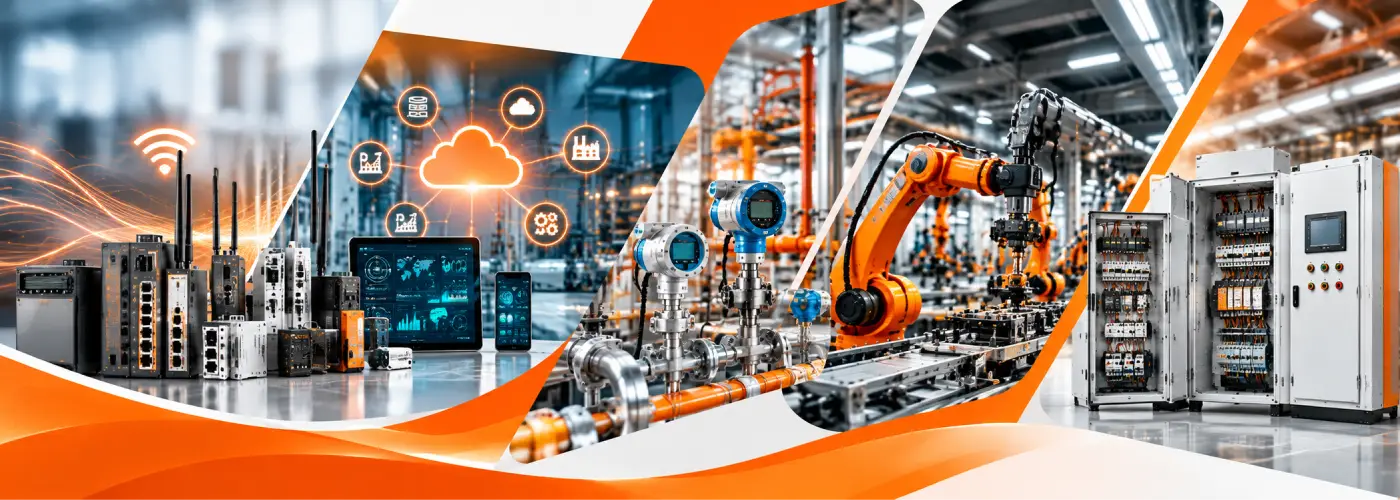
Industrial Communications & IoT Supplier
Modern industrial facilities depend on more than machines and automation controllers. These devices also need a dependable way to exchange information with one another. Industrial communication provides the networking foundation that allows PLCs, HMIs, drives, sensors, computers, remote I/O, and other automation equipment to communicate across a plant. At the same time, Industrial IoT (IIoT) takes this connectivity further by collecting operational data from machines and field devices and using that information for monitoring, analysis, optimization, and smarter decision-making. Yuva Solution is an Industrial Communications & IoT Supplier serving industrial customers in Kolkata, Bihar, Odisha, Jharkhand, Chhattisgarh, and Assam.
Our range includes:
- Managed & Unmanaged Switches
- Communication Cables
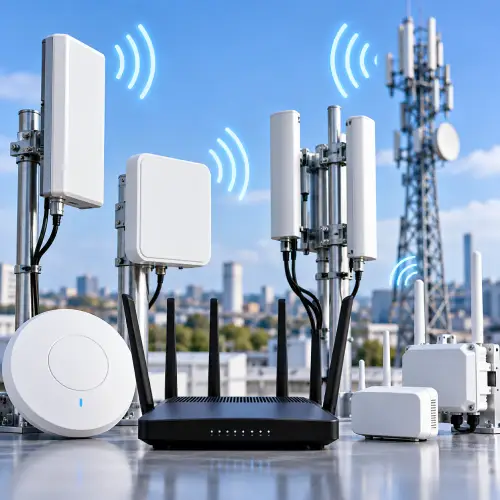
- Wireless Solutions
- RF ID
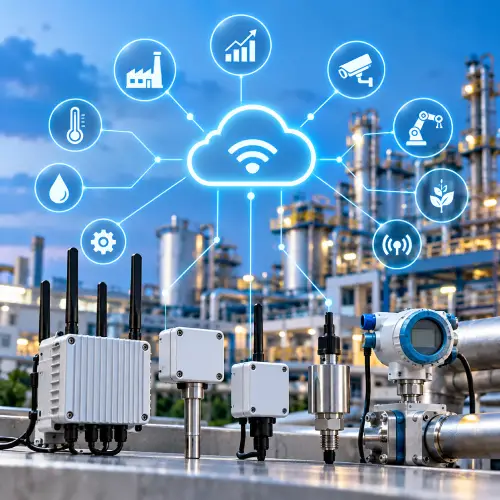
- IoT Solutions
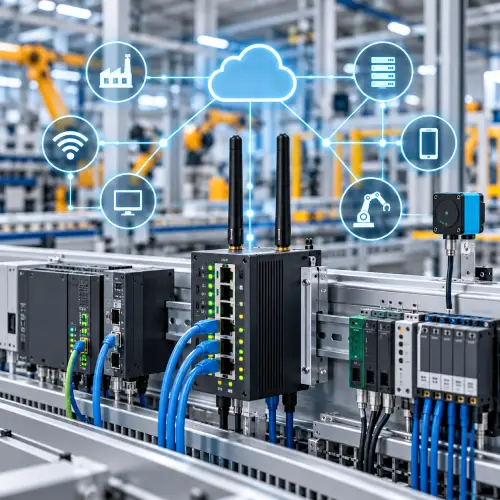
What Is Industrial Communication?
Industrial communication refers to the technologies and networks that allow industrial devices and automation systems to exchange information. A production plant may contain PLCs, HMIs, drives, sensors, remote I/O, SCADA systems, robots, industrial PCs, and other equipment. Industrial communication connects these devices so that control commands, measurements, status information, alarms, and other data can move between them.
Unlike ordinary office networking, industrial communication often has to operate around electrical noise, vibration, temperature variations, machinery, and continuous production requirements. Industrial Ethernet equipment is therefore commonly designed specifically for factory-floor conditions.
Industrial communication can involve technologies and protocols such as Ethernet-based networks, serial communication, fieldbus systems, wireless connectivity, and other industrial networking arrangements.
Why Industrial Communication Is Important
A well-planned communication network can help an industrial facility:
- Connect automation equipment
- Exchange machine data
- Coordinate production systems
- Monitor equipment status
- Transfer information between control levels
- Support remote diagnostics
- Connect field devices with controllers
- Provide a communication path for SCADA and HMI systems
- Create a foundation for Industrial IoT
The communication architecture should be selected according to the number of devices, network layout, required speed, environmental conditions, reliability requirements, and future expansion plans.
What Is Industrial IoT?
Industrial IoT, commonly called IIoT, refers to the use of connected sensors, machines, controllers, gateways, software, and data platforms to collect and use information from industrial operations. The basic idea is simple: machines generate large amounts of information during operation. IIoT provides a way to collect that information and turn it into useful operational knowledge.
For example, an IIoT system may collect:
- Machine operating status
- Temperature readings
- Pressure values
- Energy consumption
- Production counts
- Equipment runtime
- Motor parameters
- Alarm information
- Maintenance-related data
- Process performance information
This data can then be displayed, stored, analyzed, or transferred to higher-level software systems depending on the architecture.
Industrial Communication vs Industrial IoT
Although these terms are closely related, Industrial Communication and Industrial IoT are not the same thing.
|
Industrial Communication |
Industrial IoT |
|
Focuses on connecting industrial devices |
Focuses on collecting and using industrial data |
|
Provides the communication pathway |
Uses connectivity as part of a larger data ecosystem |
|
Transfers information between devices and systems |
Turns machine information into actionable insights |
|
Commonly supports PLC, HMI, SCADA, drives and field devices |
Can connect machines, sensors, gateways, analytics and software platforms |
|
Primarily concerned with reliable data exchange |
Extends connectivity toward monitoring, analytics and optimization |
|
Forms part of the industrial network infrastructure |
Builds additional intelligence around connected assets |
In simple words:
Industrial Communication is the pathway through which information travels, while Industrial IoT uses that connectivity to collect, analyze, and make better use of industrial information.
The two technologies therefore complement each other rather than competing with one another.
Our Industrial Communications & IoT Product Range
Managed & Unmanaged Switches
Industrial switches provide network connectivity between Ethernet-enabled automation devices.
Unmanaged switches are generally suited to straightforward networks where plug-and-play connectivity is sufficient. Managed switches provide additional control and visibility, including features such as VLANs, traffic management, diagnostics, redundancy, and network monitoring. (Cisco)
Yuva Solution can provide switch solutions according to the complexity and requirements of the industrial network.
Communication Cables
Communication cables provide the physical connection between industrial devices and networking equipment.
The appropriate cable depends on factors such as communication protocol, transmission distance, installation environment, electrical interference, mechanical conditions, and required performance.
Reliable cabling is particularly important because a communication network can only perform properly when its physical infrastructure is appropriate for the application.
Wireless Solutions
Wireless industrial communication can be useful where conventional cabling is difficult, expensive, or unsuitable.
Industrial wireless solutions can support communication between machines, sensors, remote equipment, mobile assets, and monitoring systems. They may be considered for applications involving difficult-to-reach locations, moving equipment, temporary installations, or distributed assets.
The appropriate wireless technology depends on range, data requirements, environmental conditions, interference, security, and network architecture.
RF ID
RFID (Radio Frequency Identification) enables objects, products, components, or assets to be identified using radio-frequency technology.
RFID can be useful for:
- Asset identification
- Product tracking
- Inventory management
- Material movement
- Warehouse operations
- Production traceability
- Access and identification systems
- Automated data collection
It can reduce dependence on manual identification and provide a digital method of tracking selected industrial assets.
IoT Solutions
Industrial IoT solutions bring connectivity, data acquisition, and software-based monitoring together.
Depending on the application, an IIoT architecture may include sensors, PLCs, gateways, communication networks, edge devices, databases, dashboards, analytics platforms, and cloud or on-premise systems.
Applications can include:
- Machine condition monitoring
- Energy monitoring
- Production monitoring
- Remote equipment supervision
- Predictive maintenance support
- Asset tracking
- Utility monitoring
- Performance analysis
The objective is to make industrial data easier to access and more useful for operational decisions.
How Industrial Communication and IoT Work Together
Consider a manufacturing machine equipped with temperature, vibration, current, and production sensors.
The communication network provides the pathway for information to move from the machine and its connected devices.
An IIoT solution can then collect this information, store it, display it on a dashboard, and analyze patterns over time.
For example:
Sensor → PLC/Controller → Industrial Network → IoT Gateway → Data Platform → Dashboard/Analysis
This combination can provide manufacturers with a broader view of machine performance than conventional local control alone.
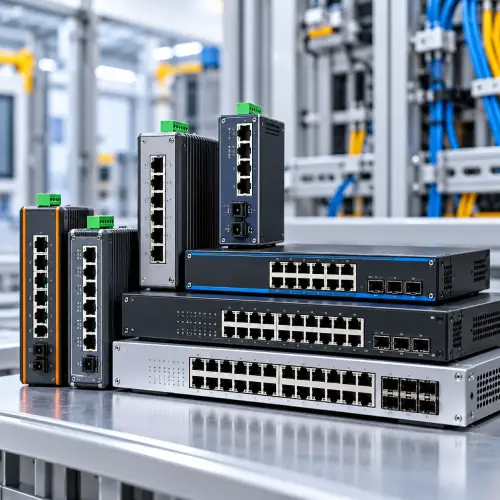
Managed & Unmanaged Switches
Managed & Unmanaged Switches provide the network connection required for Ethernet-based industrial equipment.
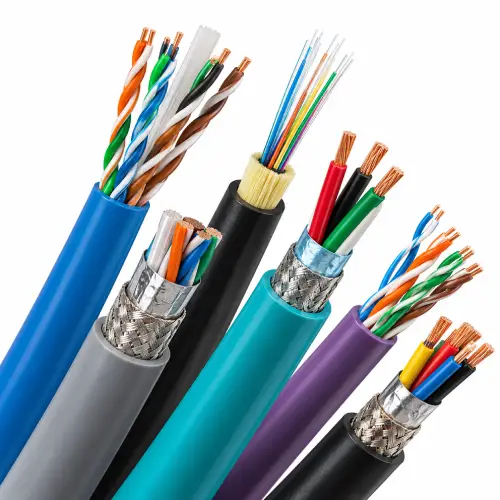
Communication Cables
Communication Cables provide the physical pathway through which digital or serial signals travel between industrial equipment.
Wireless Solutions
A Wireless Home Automation Solution allows connected devices such as lights, fans, appliances, curtains, sensors,

RF ID
RFID for Automation combines radio-frequency identification technology with industrial automation to identify, track, and manage
IOT Solutions
Lorem ipsum dolor sit amet, consectetur adipiscing elit. Ut elit tellus, luctus nec ullamcorper mattis, pulvinar dapibus leo.
Benefits of Industrial Communications & IoT
A properly designed connectivity and IoT infrastructure can help industries achieve:
- Better visibility of machine operations
- Faster access to production information
- Centralized monitoring
- Improved asset tracking
- Remote equipment supervision
- Easier collection of operational data
- Support for predictive maintenance strategies
- More informed production decisions
- Improved communication between automation systems
- Better utilization of existing machine data
The exact benefits depend on the application, network design, sensors, software, and level of automation implemented.
Why Choose Yuva Solution?
Yuva Solution provides Industrial Communications and IoT solutions for businesses looking to improve connectivity between machines, automation systems, and operational data.
The company serves customers across Kolkata, Bihar, Odisha, Jharkhand, Chhattisgarh, and Assam.
Customers can approach Yuva Solution for:
- Industrial network requirements
- Managed and unmanaged switches
- Communication cables
- Wireless industrial connectivity
- RFID solutions
- Industrial IoT solutions
- Automation communication requirements
- Connectivity planning and product selection
The focus is on selecting technology according to the actual application instead of treating every industrial network in the same way.
Industrial Applications
Industrial Communications & IoT solutions can be considered for:
- Manufacturing plants
- Process industries
- Automotive production
- Warehouses
- Packaging facilities
- Power plants
- Water treatment plants
- Chemical industries
- Pharmaceutical manufacturing
- Food processing
- Material handling
- Machine-building applications
- Large industrial campuses
As plants become more connected, communication infrastructure can serve as the foundation for integrating machines, automation systems, monitoring platforms, and IIoT applications.
Frequently Asked Questions
Industrial Communication is the technology used to exchange information between industrial devices such as PLCs, HMIs, drives, sensors, remote I/O, SCADA systems, and other equipment.
Industrial IoT is the use of connected industrial equipment, sensors, communication networks, gateways, software, and data systems to collect and utilize operational information.
No. Industrial Communication primarily provides device-to-device and system-to-system connectivity, while IIoT builds upon connectivity to collect, analyze, monitor, and utilize industrial data.
Yuva Solution offers Managed & Unmanaged Switches, Communication Cables, Wireless Solutions, RFID, and IoT Solutions.
Yes. Depending on the equipment and architecture, IIoT solutions can be connected with existing PLCs, sensors, SCADA systems, machines, and other industrial equipment.
Yuva Solution serves customers in Kolkata, Bihar, Odisha, Jharkhand, Chhattisgarh, and Assam.
Build a Connected Industrial Environment With Yuva Solution
Industrial connectivity is becoming an important part of modern manufacturing and process management. Whether the requirement is a reliable industrial network, wireless connectivity, RFID-based identification, or a complete IIoT solution, the right architecture starts with understanding the application.
Yuva Solution provides Industrial Communications & IoT solutions designed to help businesses connect equipment, collect information, and create a more connected industrial environment across Kolkata, Bihar, Odisha, Jharkhand, Chhattisgarh, and Assam.