
IoT Solutions Manufacturer
Smart Connectivity for Industrial Operations
Industrial businesses generate information continuously—from machines, meters, sensors, production lines, utilities, and equipment. IoT Solutions create a connected environment where this information can be collected, transmitted, monitored, and used for better operational decisions.
Yuva Solution provides IoT solutions for industrial and commercial requirements across Kolkata, Bihar, Odisha, Jharkhand, Chhattisgarh, and Assam. Rather than treating IoT as simply a collection of connected devices, the company focuses on building a communication and data flow that fits the customer’s actual operation.
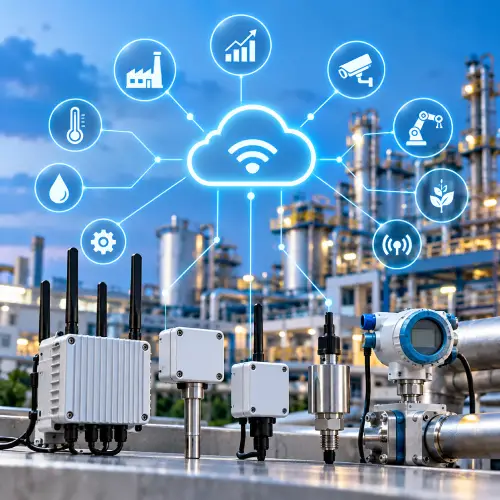
An IoT setup can bring together sensors, controllers, gateways, communication networks, dashboards, databases, and software platforms to create a continuous flow of useful information.
What Our IoT Solutions Can Do
A properly designed IoT system can connect previously isolated equipment and make selected operating information available from a centralized interface.
Depending on the application, an IoT solution may provide:
- Real-time equipment monitoring
- Remote access to selected operating information
- Machine data collection
- Energy and utility monitoring
- Asset tracking
- Environmental condition monitoring
- Production data collection
- Equipment alerts and notifications
- Historical data storage
- Dashboard-based visualization
- Integration with existing automation systems
The actual functionality depends on the devices, communication architecture, software, and industrial process involved.
From Machine Data to Useful Information
One of the major purposes of Industrial IoT is to make machine-generated information easier to understand and use.
Consider a manufacturing machine that operates throughout the day. Sensors or existing controllers may already produce information about temperature, operating hours, energy consumption, production quantity, or machine status.
An IoT system can collect selected data and organize it into a dashboard.
Machine → Sensors/Controller → IoT Gateway → Communication Network → Data Platform → Dashboard
This allows authorized users to view relevant information without depending entirely on manual readings.
Core Elements of an IoT System
- Sensors & Field Devices
Sensors provide information about physical conditions such as temperature, pressure, vibration, energy consumption, humidity, level, or equipment status.
- IoT Gateway
An IoT gateway can act as an intermediary between field equipment and higher-level software. It can collect data from connected devices and forward it using the appropriate communication method.
- Connectivity
Data needs a communication path to move from equipment to the monitoring or data platform. Depending on the application, this can involve Ethernet, Wi-Fi, cellular communication, industrial protocols, or other connectivity technologies.
- Data Platform
The collected information can be stored and organized so that users can review current and historical operating conditions.
- Dashboard
A dashboard converts collected information into a visual format, allowing users to monitor selected parameters from a computer, tablet, or other supported device.
IoT Solutions for Existing Machines
- A major advantage of IoT technology is that connectivity does not necessarily mean replacing an entire machine or automation system.
- Where compatible interfaces are available, data may be collected from existing PLCs, controllers, meters, sensors, drives, or other equipment.
- Additional sensors or gateways can also be introduced where the existing system does not provide the required information.
- This can make IoT particularly useful for facilities that want to introduce digital monitoring gradually.
Technical Architecture
An IoT system can be designed in several ways depending on the application.
Layer | Typical Function |
Field Layer | Sensors, meters and equipment |
Control Layer | PLCs, controllers and automation devices |
Edge Layer | Data collection and local processing |
Communication Layer | Ethernet, wireless or cellular connectivity |
Data Layer | Storage and organization of collected information |
Application Layer | Dashboard, reports, alerts and analytics |
Not every project requires every layer. A small monitoring application may use a relatively simple architecture, while a multi-machine industrial deployment may require a more extensive system.
Technical Specifications
IoT specifications should be finalized according to the application rather than using a single standard configuration.
Parameter | Typical Consideration |
Connected Devices | Sensors / PLCs / Meters / Machines |
Communication | Ethernet / Wi-Fi / Cellular / Other |
Data Source | New or existing equipment |
Protocol | Application dependent |
Data Collection | Periodic / Event-based / Continuous |
Gateway | Industrial IoT gateway where required |
Dashboard | Web / Application-based |
Data Storage | Local / Remote / Cloud-based |
Alerts | Application dependent |
Remote Monitoring | Available with suitable architecture |
Security | Authentication and access controls |
Power Supply | Device specific |
Installation | Indoor / Industrial / Outdoor as applicable |
The final technical configuration should be determined after evaluating the number of assets, data points, communication distance, network availability, environmental conditions, and monitoring objectives.
Practical IoT Applications
- Machine Monitoring
Monitor selected machine parameters and operating status from a centralized interface.
- Energy Management
Connected meters can provide information about electricity or other utility consumption, helping businesses understand usage patterns.
- Predictive Maintenance Support
Data such as vibration, temperature, runtime, or operating cycles can be collected to support maintenance analysis. IoT itself does not guarantee predictive maintenance; appropriate sensors, data quality, and analytical methods are required.
- Production Monitoring
IoT systems can collect production counts, machine running time, downtime information, and other selected production indicators.
- Remote Equipment Monitoring
Distributed assets can be monitored without requiring personnel to physically visit every location for routine status checks.
- Environmental Monitoring
Temperature, humidity, air-quality-related parameters, and other environmental conditions can be monitored where appropriate sensors are installed.
- Asset Tracking
Connected identification and location-related technologies can help organizations monitor the movement or status of selected assets.
IoT and Automation: How Are They Different?
Automation and IoT often work together, but their primary purposes are different.
Automation is mainly concerned with making a machine or process perform control actions according to defined logic.
IoT is primarily concerned with connecting devices, collecting information, making that information accessible, and supporting monitoring and analysis.
For example, a PLC may automatically control a motor based on process conditions. An IoT system can collect the motor’s operating data and display runtime, status, or energy information on a dashboard.
Together, they can create a more connected industrial environment.
IoT Solutions for Commercial & Industrial Requirements
IoT is not limited to large manufacturing plants. The technology can be scaled according to the number of devices and the information that needs to be collected.
Potential users include:
- Manufacturing units
- Process industries
- Warehouses
- Commercial buildings
- Power and utility facilities
- Water treatment plants
- Packaging units
- Pharmaceutical facilities
- Food processing plants
- Engineering industries
- Logistics operations
- Infrastructure facilities
A small installation may monitor a few parameters, while a larger system can connect multiple machines and locations.
Why Choose Yuva Solution?
Yuva Solution provides IoT solutions for customers across Kolkata, Bihar, Odisha, Jharkhand, Chhattisgarh, and Assam.
The company focuses on application-driven IoT implementation, where the first step is understanding what information the customer needs and why it is required.
This helps avoid collecting unnecessary data and allows the system architecture to be planned around practical objectives.
Yuva Solution can assist with requirements involving:
- Industrial IoT connectivity
- Machine data acquisition
- Remote monitoring
- IoT gateways
- Sensor connectivity
- Energy monitoring
- Production monitoring
- Equipment status monitoring
- Dashboard requirements
- Automation and IoT integration
Building a Connected Future With IoT
- The value of IoT does not come merely from connecting a machine to the internet. Its real purpose is to turn operational information into something that people can monitor, understand, and act upon.
- With suitable sensors, communication infrastructure, data acquisition, and software, businesses can gradually move toward more visible and data-driven operations.
- Yuva Solution helps customers explore IoT solutions according to their existing equipment, communication infrastructure, monitoring requirements, and future expansion plans.
Frequently Asked Questions
An IoT solution connects physical devices or equipment so that selected information can be collected, transmitted, monitored, stored, or analyzed through a suitable digital system.
Yes. Where compatible communication interfaces and protocols are available, an IoT system can collect selected information from PLCs and other automation controllers.
It can be. Existing machines may sometimes be connected through their available controller interfaces, meters, communication ports, or additional sensors.
Yes. A suitably designed IoT architecture can allow authorized users to access selected equipment or process information remotely.
No. Depending on the application, data processing and storage can be performed locally, remotely, or through a combination of architectures.
Yuva Solution serves customers across Kolkata, Bihar, Odisha, Jharkhand, Chhattisgarh, and Assam.
Contact Yuva Solution
If you are planning to connect machines, monitor equipment, collect production information, track energy consumption, or introduce digital monitoring into your facility, Yuva Solution can help you identify an appropriate IoT Solution.
Discuss your equipment, data requirements, number of connected points, and monitoring objectives with Yuva Solution to develop a practical IoT approach for your operation.
Frequently Asked Questions
An IoT solution connects physical devices or equipment so that selected information can be collected, transmitted, monitored, stored, or analyzed through a suitable digital system.
Yes. Where compatible communication interfaces and protocols are available, an IoT system can collect selected information from PLCs and other automation controllers.
It can be. Existing machines may sometimes be connected through their available controller interfaces, meters, communication ports, or additional sensors.
Yes. A suitably designed IoT architecture can allow authorized users to access selected equipment or process information remotely.
No. Depending on the application, data processing and storage can be performed locally, remotely, or through a combination of architectures.
Yuva Solution serves customers across Kolkata, Bihar, Odisha, Jharkhand, Chhattisgarh, and Assam.