Key Reasons to Choose This Solution
- Convenient Everyday Control
Lights, fans, curtains, and other compatible devices can be operated through connected control interfaces, reducing the need to operate each device manually.
Wireless communication can be useful where running new control cables is difficult or where homeowners want to introduce automation without extensive modification to the property.
Automation routines can be created according to individual requirements. For example, selected lights can be programmed to switch on or off according to a schedule or a particular event.
Multiple connected devices can be managed from a common interface, depending on the automation platform selected.
- Energy-Conscious Operation
Automation can help users avoid leaving certain lights or appliances operating unnecessarily. Actual energy savings depend on how the system is configured and used.
A wireless system can potentially be expanded by adding compatible devices as the homeowner’s requirements change.
Technical Specifications
Wireless home automation does not have one fixed technical specification because the configuration depends on the selected devices and automation architecture.
Parameter | Typical Consideration |
Communication | Wireless, system dependent |
Control Method | App / Remote / Voice / Automated routines |
Connectivity | Wi-Fi / Bluetooth / Zigbee / Other compatible technology |
Devices | Lights, fans, appliances, curtains, sensors, etc. |
Control Architecture | Hub-based or hub-free, depending on system |
Mobile Access | Available with compatible solutions |
Scheduling | Model/system dependent |
Sensors | Motion, door, environmental and other options |
Installation | New or selected existing installations |
Integration | Compatible smart-home ecosystem dependent |
Power Supply | Device specific |
Expansion | Dependent on system capacity |
Specific communication range, load capacity, supported protocols, electrical ratings, app compatibility, and number of connected devices should be confirmed according to the selected system.
Common Applications
Wireless home automation can be used in different areas of a residential property.
Automated lighting, fans, curtains, and scene-based controls can make everyday room operation more convenient.
Users can create customized lighting or appliance routines according to their daily schedules.
Compatible lights, exhaust systems, and selected appliances can be incorporated into an automation setup.
Door sensors, smart lighting, and selected security-related devices can work together to provide additional monitoring and convenience.
Wireless controls can be used for compatible garden, balcony, driveway, or outdoor lighting systems.
Multiple rooms can be connected through a common automation platform where the selected system supports centralized management.
Quality You Can Trust
A home automation system should be selected with attention to both functionality and electrical safety. Components should be appropriate for the intended load and installation environment.
Yuva Solution focuses on application-based selection rather than simply adding as many connected devices as possible. The proposed configuration can take into consideration the home’s electrical system, required control points, wireless coverage, connected load, and desired automation functions.
Proper installation and configuration are also important for reliable operation.
Why Choose Yuva Solution?
Yuva Solution provides Wireless Home Automation Solutions for customers in Kolkata, Bihar, Odisha, Jharkhand, Chhattisgarh, and Assam.
The company can assist customers in identifying suitable automation components according to their requirements, whether the objective is simple smart lighting or a broader connected-home setup.
Customers can approach Yuva Solution for:
- Wireless home automation solutions
- Smart lighting control
- Smart switch solutions
- Appliance automation
- Curtain automation
- Sensor-based automation
- Remote monitoring and control
- Home automation integration requirements
- System selection assistance
The focus is on creating a practical automation setup that matches the property and the user’s actual needs.
Infrastructure and Residential Uses of Wireless Home Automation
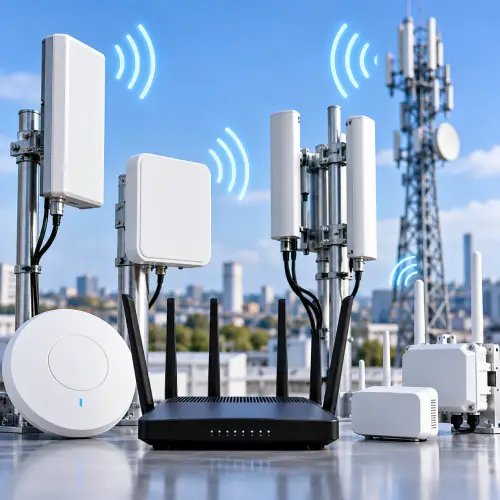
Wireless automation can become part of a broader smart-home infrastructure. Different devices can communicate through a suitable wireless network and, where supported, exchange information with a central hub or application.
A basic arrangement may work like:
Smart Device → Wireless Network → Controller/Hub → Mobile or User Interface
A more advanced arrangement can combine sensors and automation rules. For example, a motion sensor can detect activity and trigger compatible lighting, while a door sensor can initiate a selected notification or automation routine.
This approach can help transform individual smart devices into a more coordinated home environment.