
Lifecycle Engineering Services
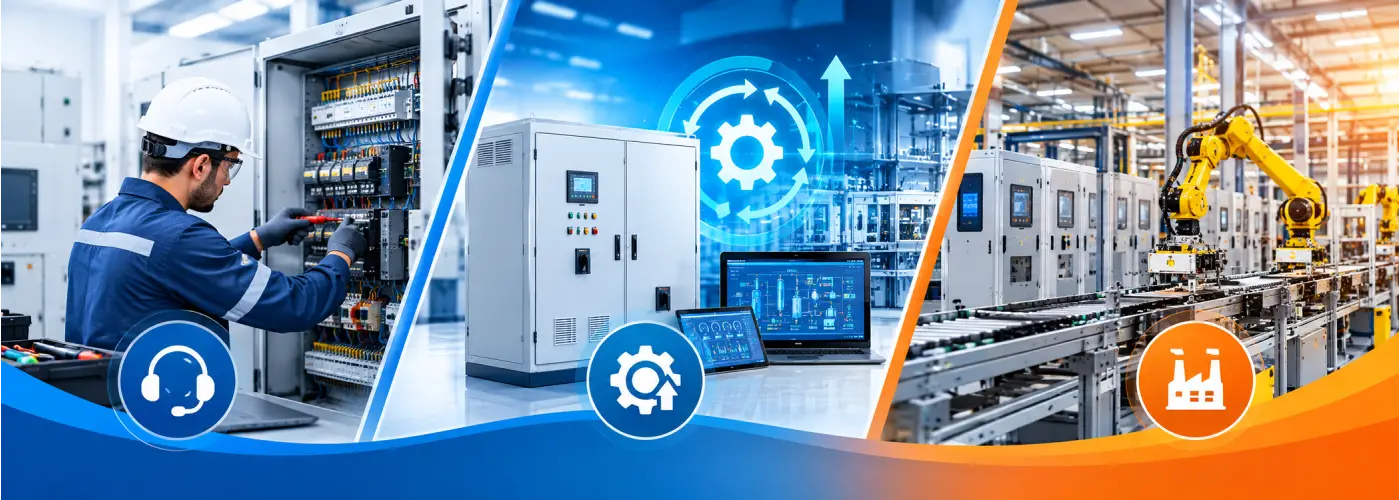
Industrial automation systems are built to remain in service for many years, but the engineering requirements around those systems can change as production expands, equipment ages, control strategies evolve and new technologies become available. Lifecycle Engineering Services help industries evaluate these changes from a technical and operational perspective and make informed decisions about their automation infrastructure.
Yuva Solution provides lifecycle engineering solutions for industrial automation systems across Kolkata, Bihar, Odisha, Jharkhand, Chhattisgarh and Assam.
Our approach focuses on understanding the complete automation environment—from controllers and field devices to electrical panels, drives, operator interfaces and industrial communication—so that future modifications can be planned with greater clarity.
What Are Lifecycle Engineering Services?
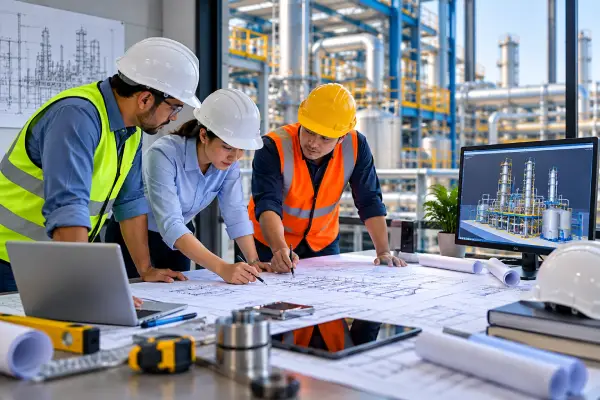
Lifecycle Engineering Services involve the technical assessment, planning and improvement of an installed system throughout its useful operating period.
In an industrial automation environment, this may involve studying:
- Existing control architecture
- PLC and I/O systems
- HMI and SCADA platforms
- Drive systems
- Control panels
- Industrial communication networks
- Instrumentation interfaces
- Electrical distribution interfaces
- Machine-control systems
- Available engineering documentation
The objective is not simply to replace old equipment. Instead, lifecycle engineering looks at the relationship between existing technology, production requirements and future plant needs.
Engineering Assessment of Existing Automation
Before recommending any modification, it is useful to understand what is actually operating at the site.
Yuva Solution can assess aspects such as:
- Control Architecture
Reviewing PLCs, remote I/O, controllers, HMI stations, SCADA systems and their communication relationships.
- Hardware Condition
Identifying ageing controllers, discontinued modules, unavailable spare parts and components that may create future maintenance challenges.
- Software Environment
Reviewing available PLC programs, HMI applications, SCADA configurations, drive parameters and relevant backups where accessible.
- Electrical Interface
Examining control panels, field wiring, power supplies, protection devices and connections between automation and electrical equipment.
- Network Infrastructure
Assessing industrial communication links and the suitability of existing communication architecture for future expansion.
Lifecycle Engineering for Legacy Automation
Many industrial facilities continue to operate automation systems installed several years ago. These systems may still perform their intended function, even though their original hardware or software platform is no longer ideal for long-term operation.
A lifecycle engineering study can help determine whether the existing installation should be:
- Retained
- Repaired
- Partially upgraded
- Retrofitted
- Migrated to a newer platform
- Re-engineered completely
This assessment allows modernization decisions to be based on the actual condition and importance of the system.
Modernization Without Unnecessary Replacement
A complete automation replacement can involve significant engineering work, downtime and changes to established operating practices. In some situations, a staged modernization strategy may be more practical.
For example, an upgrade may initially focus on:
- Replacing obsolete PLC hardware
- Retaining selected field instrumentation
- Updating HMI stations
- Replacing unsupported drives
- Improving industrial communication
- Modifying control panels
- Migrating software gradually
The final approach depends on compatibility, system condition, production requirements and the customer’s modernization objectives.
Requirements-Based Engineering
Every plant has different production targets and operating constraints. Lifecycle engineering therefore begins with the requirements rather than assuming that the same solution will suit every installation.
The engineering study can consider:
- Current production requirements
- Future capacity expansion
- Machine operating sequence
- Control philosophy
- Operator requirements
- Maintenance practices
- Safety considerations
- Available spare parts
- Technology availability
- Planned plant modifications
This creates a technical foundation for future automation decisions.
Reliability & Maintainability Considerations
An automation system should not only perform its control function; it should also be practical to maintain.
Lifecycle engineering can examine areas such as:
- Availability of critical components
- Accessibility of panel equipment
- Spare-part strategy
- Controller redundancy requirements
- Backup availability
- Communication dependencies
- Fault-diagnostic facilities
- Maintenance documentation
- Replacement complexity
These considerations can help organizations identify weak points before they become major operational concerns.
Verification & Testing Support
Engineering changes need to be checked before they become part of normal plant operation.
Depending on the project, Yuva Solution can support activities related to:
- Control-logic verification
- I/O checking
- Communication testing
- HMI functionality
- Interlock verification
- Sequence testing
- Drive-control testing
- Panel functional checks
- Site commissioning support
Testing requirements are established according to the nature of the modification and the customer’s acceptance criteria.
Documentation & Engineering Records
Accurate technical documentation becomes increasingly valuable as an automation system grows older or undergoes multiple modifications.
Lifecycle engineering can include review or development of relevant records such as:
- Electrical schematics
- Control architecture drawings
- I/O lists
- Panel drawings
- Network architecture
- PLC backup information
- HMI/SCADA documentation
- Drive parameter records
- Equipment lists
- Revision records
Well-maintained documentation can make future troubleshooting, modification and expansion easier.
Planning for Future Plant Expansion
A lifecycle study can also look beyond the current installation.
If a plant expects additional production lines, new machines, higher capacity or additional monitoring, the existing automation architecture can be reviewed for its ability to accommodate those changes.
Possible considerations include:
- Spare PLC I/O capacity
- Panel space
- Network expansion
- Additional HMI requirements
- SCADA scalability
- Drive capacity
- Communication interfaces
- Control-system architecture
Planning these factors earlier can reduce complications during future expansion.
Lifecycle Engineering Across Different Automation Systems
Yuva Solution can provide engineering support for a range of industrial automation environments.
- PLC Systems
Assessment, modernization planning, hardware migration and control-logic considerations.
- HMI Systems
Review of operator interfaces, application migration and replacement planning.
- SCADA Systems
Evaluation of supervisory systems, communication architecture and future monitoring requirements.
- Drive Systems
Assessment of VFDs, motor-control arrangements, drive parameters and replacement requirements.
- CNC Automation
Technical assessment of suitable machine-control and interface systems.
- Control Panels
Engineering review, component replacement, modification and automation integration.
- Industrial Networks
Evaluation of communication architecture and suitable modernization options.
Where Lifecycle Engineering Can Be Applied
Lifecycle engineering services can support automation systems used in:
- Steel and DRI plants
- Power generation facilities
- Coal handling systems
- Water treatment plants
- Chemical industries
- Cement plants
- Automotive manufacturing
- Food and beverage facilities
- Pharmaceutical industries
- Paper and textile plants
- HVAC installations
- Material handling systems
- General manufacturing facilities
A Practical Engineering Workflow
Yuva Solution can structure lifecycle engineering projects around the actual condition of the customer’s system.
- Stage 1 – Understand
Study the existing equipment, control architecture and operational requirements.
- Stage 2 – Evaluate
Identify technical limitations, obsolete components, documentation gaps and future requirements.
- Stage 3 – Develop
Prepare suitable modernization, replacement or improvement options.
- Stage 4 – Validate
Review the proposed approach against operational, electrical, automation and maintenance requirements.
- Stage 5 – Implement
Support the selected engineering changes, testing and commissioning as applicable.
Why Yuva Solution for Lifecycle Engineering?
Yuva Solution approaches lifecycle engineering from an automation and industrial-control perspective.
Instead of treating every ageing system as a replacement project, we look at the existing architecture and identify where engineering intervention can provide meaningful improvement.
Our scope can cover:
- Automation system assessment
- Legacy-system evaluation
- Modernization planning
- PLC migration engineering
- HMI and SCADA upgrades
- Drive-system engineering
- Control-panel modification
- Industrial network evaluation
- Engineering documentation
- Testing and commissioning support
- Future expansion planning
Lifecycle Engineering Services in Eastern India
Yuva Solution provides Lifecycle Engineering Services for industrial automation systems across:
Kolkata | Bihar | Odisha | Jharkhand | Chhattisgarh | Assam
Our services are suitable for organizations looking to understand the condition of their existing automation infrastructure, prepare for technology changes or develop a structured modernization roadmap.
Frequently Asked Questions
It means evaluating and engineering an automation system throughout its operational life, including assessment, modification, modernization, testing, documentation and future planning.
No. Maintenance focuses primarily on keeping equipment operational. Lifecycle engineering takes a broader view by examining system architecture, technology changes, future requirements, modernization options and long-term maintainability.
In some applications, yes. A phased approach may allow selected components to be upgraded while compatible parts of the existing system are retained.
PLC details, panel drawings, I/O lists, HMI/SCADA backups, drive information, network architecture, equipment lists and details of the production process can all be useful.
Where required, engineering support can include functional checks, I/O verification, communication testing, sequence verification and commissioning-related activities.
Manufacturing plants, process industries, utilities, infrastructure facilities and other organizations operating long-term industrial automation systems can benefit from lifecycle engineering.
Build a Better Long-Term Plan for Your Automation System
An ageing automation system does not always require an immediate complete replacement. A detailed engineering assessment can reveal what should be retained, what needs attention and where modernization can deliver the greatest value.
Yuva Solution provides Lifecycle Engineering Services for industrial automation applications across Kolkata, Bihar, Odisha, Jharkhand, Chhattisgarh and Assam.
Discuss your existing PLC, SCADA, HMI, drive, control-panel or industrial automation system with Yuva Solution to develop a practical lifecycle engineering strategy.
Frequently Asked Questions
It means evaluating and engineering an automation system throughout its operational life, including assessment, modification, modernization, testing, documentation and future planning.
No. Maintenance focuses primarily on keeping equipment operational. Lifecycle engineering takes a broader view by examining system architecture, technology changes, future requirements, modernization options and long-term maintainability.
In some applications, yes. A phased approach may allow selected components to be upgraded while compatible parts of the existing system are retained.
PLC details, panel drawings, I/O lists, HMI/SCADA backups, drive information, network architecture, equipment lists and details of the production process can all be useful.
Where required, engineering support can include functional checks, I/O verification, communication testing, sequence verification and commissioning-related activities.
Manufacturing plants, process industries, utilities, infrastructure facilities and other organizations operating long-term industrial automation systems can benefit from lifecycle engineering.