
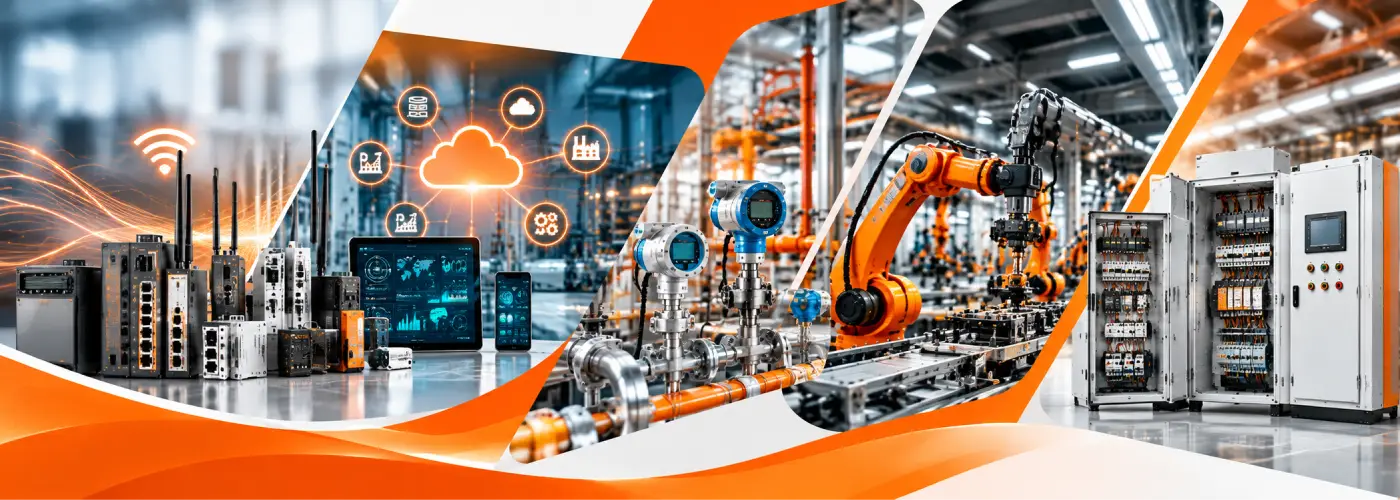
HVAC Systems Automation Solutions
Heating, ventilation, and air-conditioning systems play an important role in maintaining suitable indoor and industrial environments. In commercial buildings and industrial facilities, HVAC equipment may operate across different zones and changing loads. Managing these systems through automation can make temperature control, equipment scheduling, airflow management, and monitoring more systematic. Yuva Solution provides HVAC Automation Service Provider solutions for industrial and commercial applications across Kolkata, Bihar, Odisha, Jharkhand, Chhattisgarh, and Assam. Our automation solutions can be designed around HVAC equipment, field sensors, electrical controls, variable frequency drives, PLCs, HMI, SCADA, and building or industrial communication systems.
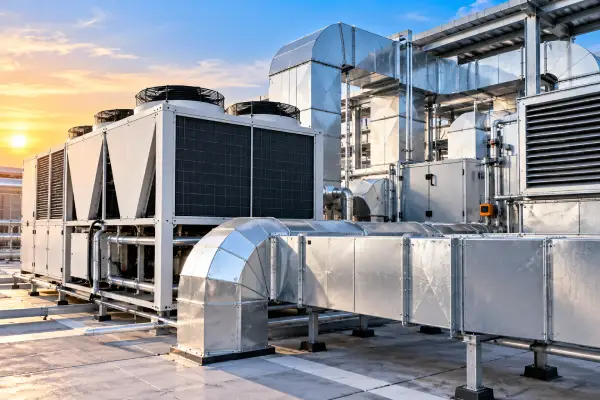
Understanding HVAC Systems
HVAC stands for Heating, Ventilation and Air Conditioning. An HVAC system is designed to manage environmental conditions such as temperature, air movement, ventilation, and, where required, humidity.
Depending on the application, an HVAC installation may contain:
- Air Handling Units (AHUs)
- Chillers
- Cooling towers
- Pumps
- Supply and exhaust fans
- Ventilation units
- Dampers
- Control valves
- Duct systems
- Temperature sensors
- Pressure sensors
- Humidity sensors
- Variable frequency drives
The equipment arrangement varies according to the building, industrial process, occupancy, and environmental requirements.
Why HVAC Automation Is Important
HVAC equipment often needs to respond to changing indoor conditions and operating schedules. Manual operation of multiple fans, pumps, dampers, and other devices can make centralized supervision difficult.
Automation provides a control layer that can coordinate suitable HVAC equipment according to programmed conditions. For example, temperature sensors can provide information to the controller, while the automation system can use that information to operate compatible equipment according to the configured control strategy.
HVAC Control System by Yuva Solution
A typical automated HVAC control arrangement can bring field devices and equipment into one coordinated system.
A simplified architecture can be:
Sensors → Controller / PLC → Drives & Actuators → HVAC Equipment → HMI / SCADA
Depending on the project, the system may include PLC panels, VFDs, temperature transmitters, pressure sensors, control valves, dampers, HMI stations, SCADA software, and communication networks. The final architecture should be selected according to the HVAC design and project requirements.
Monitoring Temperature, Pressure & Airflow
HVAC automation can provide operators with information about important operating conditions.
Depending on the system, monitored parameters may include:
- Room temperature
- Supply air temperature
- Return air temperature
- Humidity
- Air pressure
- Differential pressure
- Airflow
- Fan status
- Pump status
- Chiller status
- Valve position
- Damper position
- Equipment alarms
Displaying these values through an HMI or SCADA platform can make system supervision easier.
AHU Automation
Air Handling Units are commonly used to circulate and condition air in buildings and industrial facilities. AHU automation can involve monitoring and controlling suitable components such as supply fans, return fans, dampers, valves, filters, heating or cooling elements, and sensors.
Depending on the AHU design, automation can support:
- Fan start/stop
- Variable-speed operation
- Temperature monitoring
- Pressure monitoring
- Damper control
- Valve control
- Filter-related alarm inputs
- Equipment interlocking
- Operating schedule management
The exact control sequence depends on the AHU configuration and application.
Chiller & Pump Control
Chillers and associated pumps can form an important part of centralized cooling systems.
Automation can coordinate suitable chillers, chilled-water pumps, condenser-water pumps, and related equipment according to the defined operating philosophy.
Possible functions include:
- Pump start/stop
- VFD-based speed control
- Chiller status monitoring
- Temperature monitoring
- Flow monitoring
- Equipment interlocking
- Alarm indication
- Duty/standby sequencing
The control strategy should be developed around the manufacturer’s equipment requirements and the overall HVAC design.
Ventilation Fan Automation
Ventilation systems are used to move air through buildings, industrial spaces, enclosed areas, and other facilities. Automated fan control can provide scheduled operation, status monitoring, variable-speed control, and fault indication where appropriate.
Applications can include:
- Fresh-air fans
- Exhaust fans
- Supply fans
- Industrial ventilation
- Parking ventilation
- Utility-area ventilation
- Process-area ventilation
Fan operation can be controlled through suitable PLC or building automation interfaces depending on the project.
HVAC Automation for Industrial Environments
Industrial facilities may have HVAC requirements that differ from standard commercial buildings. Manufacturing processes, equipment heat loads, dust, pressure requirements, clean environments, and specific production conditions can influence HVAC design.
Automation can help coordinate HVAC equipment with industrial operating conditions.
It can be integrated with:
- Production areas
- Utility sections
- Control rooms
- Electrical rooms
- Server or equipment rooms
- Clean production environments
- Warehouses
- Commercial facilities
For specialized environments, the HVAC control philosophy should follow the applicable process and facility requirements.
VFD-Based HVAC Control
Variable Frequency Drives can be used with suitable HVAC motors to provide adjustable operating speeds.
VFD integration may be applied to:
- AHU fans
- Supply fans
- Exhaust fans
- Chilled-water pumps
- Condenser-water pumps
- Cooling tower fans
The controller can provide speed references to compatible drives according to the configured control strategy.
Variable-speed operation can also provide flexibility when HVAC demand changes, although actual energy performance depends on the complete system design and operating conditions.
HVAC Scheduling & Automatic Operation
HVAC systems do not always need to operate in the same mode throughout the day. Automation can allow equipment to operate according to predefined schedules and conditions where the project permits.
Possible functions include:
- Start/stop scheduling
- Occupancy-based operation
- Day/night modes
- Duty/standby operation
- Temperature-based control
- Automatic equipment changeover
- Alarm-based notification
Scheduling logic should be configured around the building’s operating pattern and HVAC requirements.
HMI & SCADA-Based HVAC Monitoring
An HMI can provide local monitoring and control for HVAC equipment, while SCADA can be useful for larger installations involving multiple systems or zones.
A monitoring interface may show:
- HVAC equipment status
- Temperature values
- Pressure readings
- Fan and pump status
- Drive information
- Alarm conditions
- Operating modes
- Historical trends
This can provide operators with a centralized view of HVAC operation.
Benefits of Automated HVAC Systems
A suitable HVAC automation system can help improve the way equipment is operated and monitored.
Potential advantages include:
- Centralized supervision
- Automatic equipment sequencing
- Better visibility of operating conditions
- Flexible fan and pump control
- Easier alarm identification
- Scheduled equipment operation
- Reduced repetitive manual intervention
- Better coordination between HVAC components
- Simplified monitoring of multiple zones
The actual outcome depends on the HVAC equipment, control strategy, sensors, installation, and commissioning.
HVAC Automation for New & Existing Facilities
Yuva Solution can support HVAC automation requirements for new installations and suitable modernization projects. For new facilities, the automation architecture can be developed alongside the HVAC and electrical design. Existing systems may be assessed for PLC upgrades, HMI replacement, VFD integration, additional sensor installation, control-panel modifications, or centralized monitoring. The feasibility of an upgrade depends on the existing HVAC equipment, controls, wiring, instrumentation, and communication capabilities.
Where HVAC Automation Can Be Used
Yuva Solution’s HVAC automation solutions can be considered for:
- Manufacturing facilities
- Industrial plants
- Commercial buildings
- Warehouses
- Hospitals
- Pharmaceutical facilities
- Food processing units
- Data and equipment rooms
- Shopping and commercial complexes
- Institutional buildings
- Utility facilities
Specialized applications should be designed according to their specific environmental and operational requirements.
Why Choose Yuva Solution for HVAC Automation?
Yuva Solution provides industrial automation and control solutions based on the actual requirements of the application. For HVAC projects, we can integrate suitable controllers, sensors, drives, control panels, HMI, SCADA, and communication systems to create a coordinated monitoring and control arrangement.
Our capabilities include:
- PLC-based HVAC control
- HMI development
- SCADA integration
- AHU control
- Fan and pump automation
- VFD integration
- Sensor integration
- Temperature and pressure monitoring
- Equipment sequencing
- Alarm management
- Control panel integration
- Automation modernization
HVAC Systems Automation Across Eastern India
Yuva Solution provides HVAC Systems Automation solutions across Kolkata, Bihar, Odisha, Jharkhand, Chhattisgarh, and Assam.
Our services can support industrial organizations, commercial facilities, engineering contractors, system integrators, and project developers requiring HVAC monitoring and control solutions.
Frequently Asked Questions
HVAC automation uses controllers, sensors, drives, actuators, software, and communication systems to monitor and control suitable heating, ventilation, and air-conditioning equipment.
Depending on the system, AHUs, fans, pumps, chillers, cooling towers, dampers, valves, and other compatible equipment can be monitored or controlled.
Yes. PLCs can be used for suitable HVAC sequencing, equipment control, monitoring, alarms, and interlocking applications.
Yes. VFDs can be integrated with suitable fan and pump motors where variable-speed operation is appropriate for the system design.
Existing HVAC systems may be suitable for automation upgrades after evaluating their current equipment, electrical controls, sensors, wiring, and communication infrastructure.
Yuva Solution serves customers across Kolkata, Bihar, Odisha, Jharkhand, Chhattisgarh, and Assam.
Upgrade Your HVAC Control with Yuva Solution
From AHUs and ventilation fans to chillers, pumps, cooling systems, and multi-zone HVAC installations, automation can provide a more organized way to operate and monitor connected equipment. Yuva Solution provides application-focused HVAC Systems Automation solutions for industrial and commercial requirements across eastern India.