
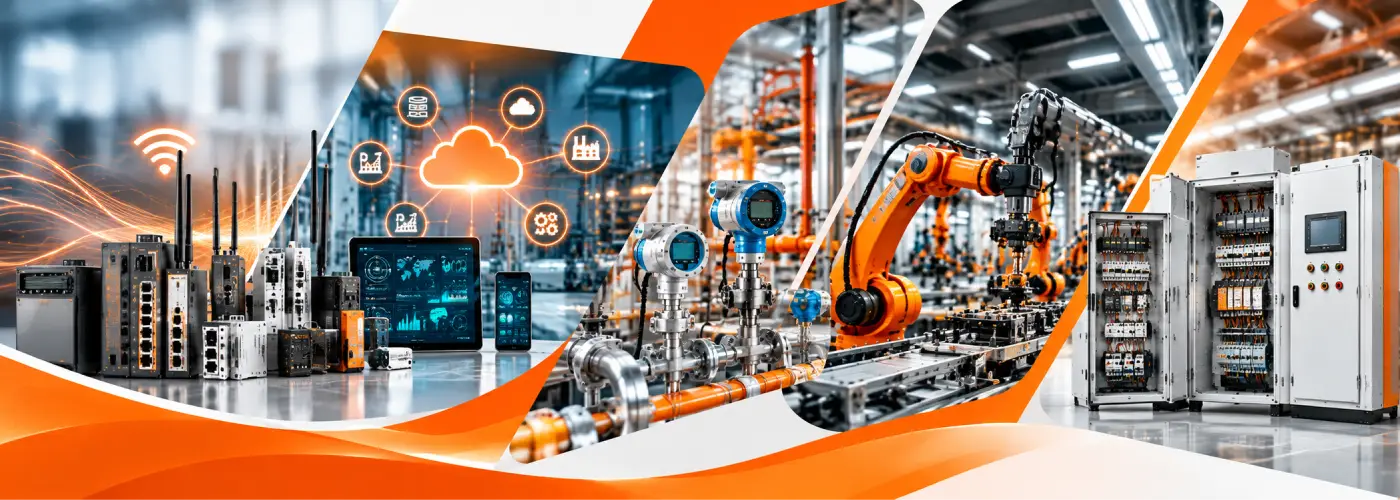
Textile Automation Service Provider
Paper and textile manufacturing involves continuous movement of rolls, webs, sheets, films, fabrics, and other flexible materials. During rewinding and slitting, accurate speed control, tension management, roll handling, and coordinated machine operation are important for maintaining production consistency. Yuva Solution provides automation and control solutions for Textile Automation Service Provider across Kolkata, Bihar, Odisha, Jharkhand, Chhattisgarh, and Assam. Our solutions can be configured around PLCs, drives, sensors, HMIs, control panels, and industrial communication systems according to the machinery and production requirements.
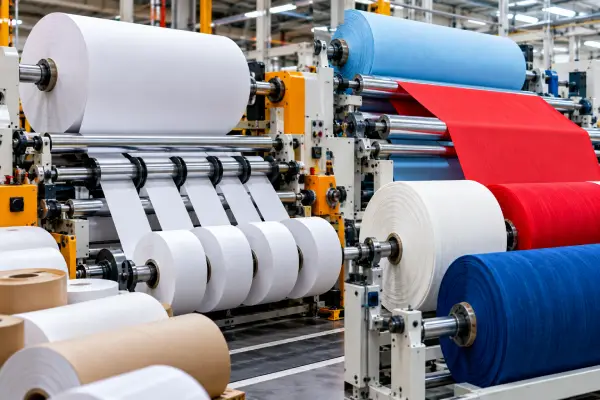
Understanding Rewinding in Paper & Textile Industries
Rewinding is the process of transferring material from one roll to another while maintaining the required roll characteristics. It is commonly used after the primary manufacturing stage to prepare material for further processing, storage, or dispatch.
In paper and textile applications, rewinding may require careful control of:
- Web speed
- Roll diameter
- Motor speed
- Tension
- Acceleration and deceleration
- Roll alignment
- Machine sequence
- Operator settings
An automation system can coordinate these parameters through programmed control logic and suitable feedback devices.
What Is Slitting?
Slitting is a converting operation in which a wider roll of material is divided into narrower rolls or strips. Depending on the material, slitting can be used for paper, textile materials, films, laminates, and other web-based products.
A slitting machine may require coordinated control of:
- Unwinding
- Web movement
- Slitting section
- Rewinding
- Drive speed
- Tension
- Roll handling
- Machine stopping and starting
Automation helps coordinate these sections so that the machine operates according to its defined production sequence.
Automation for Paper Rewinding Machines
Paper rewinding applications can involve high-speed rotating equipment and continuous web movement. Maintaining suitable speed and tension can be important for producing properly formed rolls. Yuva Solution can support automation for suitable paper rewinding machinery using PLC-based control, drive systems, sensors, and operator interfaces.
Depending on the machine, automation may provide:
- Speed regulation
- Motor control
- Tension-related control
- Roll diameter calculation
- Start/stop sequencing
- Acceleration control
- Deceleration control
- Fault monitoring
- HMI-based parameter setting
The final control strategy depends on machine construction and the characteristics of the paper being processed.
Textile Rewinding Automation
Textile materials can have different characteristics depending on the type of fabric, yarn, film, or flexible material being handled. Rewinding equipment therefore needs to be configured according to the material and production process.
Textile rewinding automation can assist with coordinated motor operation, speed management, tension control, machine sequencing, and operator monitoring.
A suitable system may integrate:
- PLC
- VFD or servo drives
- Sensors
- HMI
- Motor control
- Tension feedback
- Roll diameter inputs
- Alarm monitoring
This allows the machine control system to respond to operating conditions according to programmed logic.
Paper & Textile Slitting Machine Automation
Slitting applications require synchronization between material unwinding, cutting, and rewinding sections. An automation system can coordinate these machine functions while providing operators with access to selected operating parameters.
Depending on the equipment, the control system can support:
- Slitting machine sequence control
- Drive synchronization
- Speed adjustment
- Tension monitoring
- Roll diameter management
- Sensor feedback
- Machine status display
- Fault indication
- HMI operation
For more advanced machinery, servo or other precision drive technologies may be considered where required by the machine design.
Role of PLC in Rewinding & Slitting Automation
A PLC can act as the central control element for suitable rewinding and slitting machines. It receives signals from sensors and other devices and uses programmed logic to control connected equipment.
PLC automation can manage functions such as:
- Machine start and stop
- Drive commands
- Interlocking
- Sensor monitoring
- Speed references
- Alarm handling
- Operating sequences
- Communication with HMI and other devices
The PLC platform should be selected according to the number of I/O points, communication requirements, machine complexity, and desired control performance.
Drive & Motor Control
Drives play an important role in many rewinding and slitting machines because the material may need controlled acceleration, deceleration, and speed adjustment.
Depending on the machine, VFDs or servo drives can be integrated into the automation system.
Drive control may support:
- Variable-speed operation
- Controlled acceleration
- Controlled deceleration
- Motor protection functions
- Speed feedback
- Drive status monitoring
- Coordination between multiple motors
The appropriate drive technology depends on the required precision, motor type, machine design, and production process.
Tension Management in Web Handling
Tension is an important consideration in many paper and textile converting applications. Excessive or insufficient tension can affect the quality of the finished roll or create problems during material movement.
Automation can integrate suitable tension sensors, feedback devices, drives, and control logic to help manage the machine according to its intended operating range.
The actual tension-control method depends on the material, machine configuration, roll diameter, drive arrangement, and production requirements.
HMI & SCADA for Machine Monitoring
An HMI provides operators with a convenient interface for viewing machine conditions and changing permitted settings.
An HMI screen may display:
- Machine running status
- Speed
- Drive status
- Roll information
- Tension-related values
- Alarm messages
- Operating mode
- Production parameters
For larger production facilities, SCADA can provide supervisory monitoring of multiple machines or production sections.
Benefits of Automating Rewinding & Slitting Operations
A properly engineered automation system can provide several operational benefits:
- Consistent machine sequences
- Better coordination between drives
- Improved operator visibility
- Easier parameter adjustment
- Faster fault identification
- Reduced repetitive manual operation
- Better monitoring of machine conditions
- Improved production data availability
- Flexible machine control
Automation performance depends on the machine design, mechanical components, control strategy, instrumentation, and implementation.
Applications in Paper & Textile Manufacturing
Yuva Solution’s automation solutions can be considered for:
Paper Industry
- Paper rewinding
- Paper slitting
- Roll handling
- Web processing
- Converting machinery
- Production-line control
Textile Industry
- Textile rewinding
- Fabric handling
- Roll-to-roll processing
- Slitting applications
- Web handling machinery
- Converting equipment
The exact application depends on the type of material and machinery used.
Automation for New Machines & Existing Equipment
Automation can be integrated into new rewinding or slitting machines or considered as part of modernization for suitable existing machinery.
For existing machines, upgrades may involve PLC replacement, HMI modernization, drive integration, additional sensors, improved tension control, or industrial communication.
Before modernization, the existing electrical controls, motors, drives, mechanical arrangement, and instrumentation should be evaluated.
Why Choose Yuva Solution?
Yuva Solution provides application-oriented industrial automation solutions for manufacturing and converting equipment.
For paper and textile applications, our automation approach can be developed around the machine’s operating sequence, drive configuration, sensor requirements, material characteristics, and operator interface.
Our capabilities can include:
- PLC programming
- HMI development
- VFD integration
- Servo drive integration
- Sensor integration
- Motor control
- Control panel integration
- Machine sequencing
- Industrial communication
- Automation upgrades
Paper & Textile Automation Solutions Across Eastern India
Yuva Solution provides Paper & Textile (Rewinding/Slitting) Automation Solutions across Kolkata, Bihar, Odisha, Jharkhand, Chhattisgarh, and Assam.
Our solutions can support paper manufacturers, textile companies, machine builders, engineering contractors, converting facilities, and industrial organizations requiring machine automation or modernization.
Frequently Asked Questions
Rewinding automation uses control systems, drives, sensors, and programmed logic to coordinate the transfer of web material from one roll to another.
Slitting automation controls and monitors suitable slitting machinery used to divide wider rolls into narrower rolls or strips.
Suitable tension helps maintain controlled web movement and can contribute to consistent roll formation. The required tension depends on the material and machine.
Yes. PLCs can be used for suitable machine sequencing, drive coordination, sensor monitoring, alarms, and operator control.
Suitable existing machines can potentially be modernized with PLCs, HMIs, drives, sensors, and other control components after evaluating the existing system.
Yuva Solution serves customers across Kolkata, Bihar, Odisha, Jharkhand, Chhattisgarh, and Assam.
Build a Smarter Rewinding or Slitting Setup with Yuva Solution
Whether the requirement is for paper rewinding, textile rewinding, slitting machinery, web handling, or an existing machine automation upgrade, Yuva Solution can develop a control approach around the equipment and production requirements.
Frequently Asked Questions
Rewinding automation uses control systems, drives, sensors, and programmed logic to coordinate the transfer of web material from one roll to another.
Slitting automation controls and monitors suitable slitting machinery used to divide wider rolls into narrower rolls or strips.
Suitable tension helps maintain controlled web movement and can contribute to consistent roll formation. The required tension depends on the material and machine.
Yes. PLCs can be used for suitable machine sequencing, drive coordination, sensor monitoring, alarms, and operator control.
Suitable existing machines can potentially be modernized with PLCs, HMIs, drives, sensors, and other control components after evaluating the existing system.
Yuva Solution serves customers across Kolkata, Bihar, Odisha, Jharkhand, Chhattisgarh, and Assam.