
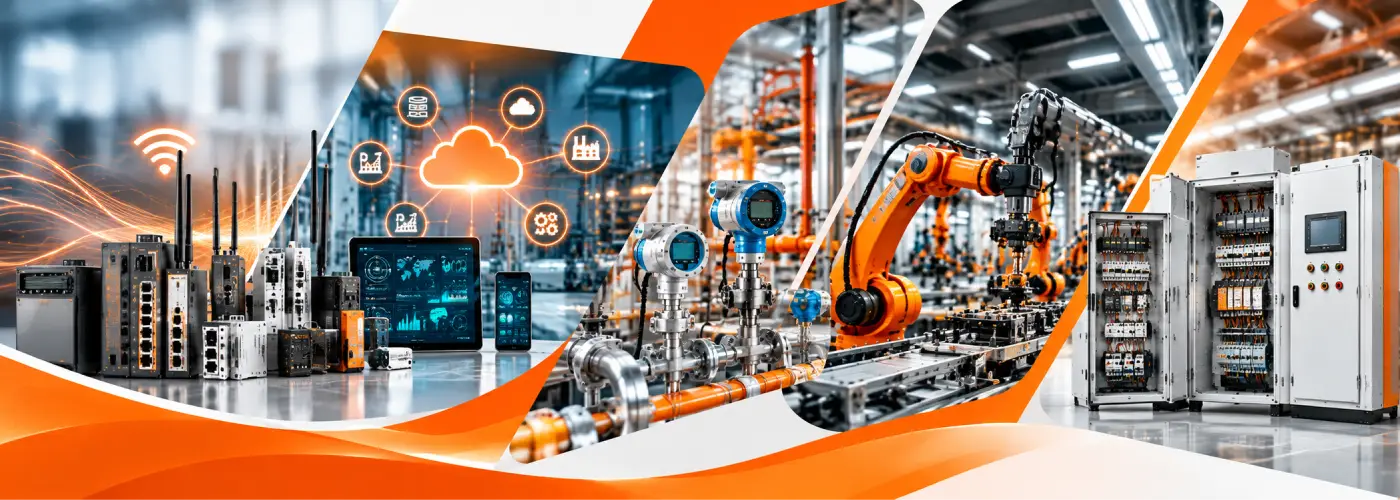
FMCG Food Beverage Automation Service
Fast-moving consumer goods and food manufacturing depend on organized production, accurate processing, reliable machinery, and consistent product handling. As production lines become more complex, automation helps manufacturers coordinate equipment, monitor processes, and reduce repetitive manual operations.
Yuva Solution provides automation solutions for FMCG Food Beverage Automation Service across Kolkata, Bihar, Odisha, Jharkhand, Chhattisgarh, and Assam, supporting applications ranging from processing and batching to filling, packaging, conveying, and production-line monitoring. Our solutions can incorporate PLCs, HMIs, SCADA systems, drives, sensors, control panels, industrial networks, and other suitable automation technologies according to the production environment.
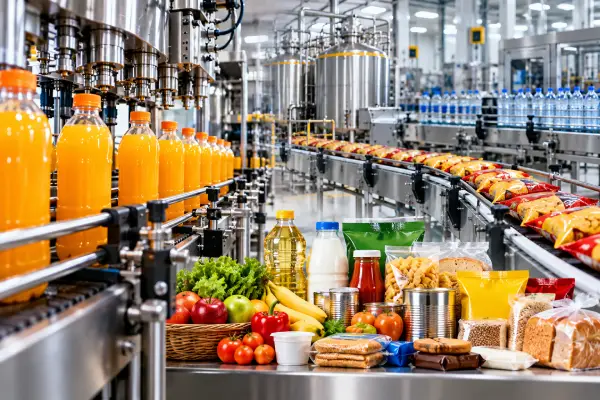
What Is Food and Beverage Automation?
Food and beverage automation involves the use of industrial control systems to monitor and operate suitable equipment used in food and beverage production. A manufacturing line may contain pumps, mixers, conveyors, fillers, packaging machines, tanks, valves, motors, sensors, and other equipment. Automation allows these components to work according to programmed sequences and defined operating conditions.
Depending on the application, the system can monitor parameters such as temperature, level, flow, pressure, speed, and equipment status.
FMCG Automation for High-Volume Production
FMCG manufacturing often involves products that are produced, packed, and distributed in large quantities. Maintaining consistent machine operation becomes important when production runs continuously or at high speed.
FMCG automation can connect different machines and processes into a coordinated production environment.
Automation may support:
- Production-line sequencing
- Conveyor control
- Filling and packaging
- Product counting
- Material handling
- Batch control
- Machine interlocking
- Motor and drive control
- Fault indication
- Operator monitoring
- Production data collection
The appropriate automation configuration depends on the product, production line, machinery, and required level of control.
Food Processing Automation
Food manufacturing involves several operations where controlled temperature, timing, material movement, mixing, filling, and packaging may be required. Food processing automation provides a systematic method for controlling suitable production equipment while allowing operators to monitor important process conditions.
Applications can include:
- Mixing systems
- Batch processing
- Ingredient handling
- Pumps and transfer systems
- Heating and cooling processes
- Filling machines
- Conveyor systems
- Packaging equipment
- Weighing systems
- Process monitoring
Automation can help coordinate these operations while providing operators with information through HMI or SCADA interfaces.
Beverage Plant Automation
Beverage production typically involves multiple stages such as water treatment, ingredient preparation, blending, processing, filling, packaging, and material movement. Beverage plant automation can bring these stages into a coordinated control system.
Depending on the plant configuration, automation may be applied to:
- Water and ingredient handling
- Blending systems
- Dosing operations
- Pump control
- Tank level monitoring
- Flow measurement
- Temperature monitoring
- Filling lines
- Bottle or container conveyors
- Packaging systems
- Cleaning-related process equipment
PLC-based systems can execute programmed sequences, while HMI or SCADA platforms can provide operators with centralized process information.
PLC-Based Control for FMCG & Food Industries
PLCs can serve as the central control element for suitable manufacturing machines and production processes. They can receive signals from sensors and execute programmed logic to control motors, valves, drives, pumps, and other connected equipment.
For FMCG and food production, PLC automation can be used for:
- Machine sequencing
- Batch operations
- Conveyor coordination
- Pump control
- Valve operation
- Filling processes
- Packaging lines
- Equipment interlocking
- Alarm handling
The PLC platform and associated components should be selected according to the required I/O count, communication requirements, process complexity, and operating environment.
HMI & SCADA for Production Visibility
Automation is not only about controlling machines. Operators also need clear information about what is happening on the production floor.
An HMI can provide machine-level information such as:
- Running status
- Fault messages
- Process values
- Set points
- Operating modes
- Alarm conditions
For larger installations, SCADA can provide supervisory monitoring across multiple machines or production sections. Historical trends and production information can also be displayed where the system has been designed for data collection.
Automation for Processing, Filling & Packaging Lines
Processing and packaging equipment often operates as a connected chain. A stoppage in one machine can influence other sections of the production line.
Automation can coordinate equipment through defined sequences and interlocks. For example, conveyor operation can be linked with the availability of upstream and downstream machines. This approach can provide better coordination across:
Processing → Filling → Conveying → Packaging → Product Handling
The actual sequence and control logic should be developed according to the production line.
Key Parameters That Can Be Monitored
Food, beverage, and FMCG production systems may require monitoring of different process and machine parameters.
Depending on the application, these may include:
- Temperature
- Pressure
- Flow
- Tank level
- Motor speed
- Conveyor status
- Pump status
- Valve position
- Production count
- Machine alarms
- Equipment availability
Not every application requires all of these parameters. The instrumentation should be selected according to the actual process.
Benefits of FMCG, Food & Beverage Automation
A well-engineered automation system can provide practical advantages for production facilities.
These may include:
- More consistent machine operation
- Better coordination between production stages
- Reduced repetitive manual control
- Centralized equipment monitoring
- Faster identification of machine faults
- Better process visibility
- Automated operating sequences
- Easier operator interaction
- Improved production data availability
- Flexible machine control
The results depend on the process, equipment, automation design, and implementation quality.
Hygiene & Production Environment Considerations
Food and beverage facilities can have specific requirements related to cleaning, moisture, temperature, sanitation, and production hygiene. Automation equipment and electrical components should therefore be selected with consideration for their installation environment. Control panels, field devices, sensors, cables, and other equipment should be appropriate for their intended location and operating conditions.
The automation system should complement the plant’s hygiene and operational practices rather than being treated as an isolated control solution.
Where FMCG, Food & Beverage Automation Can Be Used
Yuva Solution can support automation requirements for various manufacturing environments, including:
- Food processing plants
- Beverage manufacturing plants
- FMCG production facilities
- Bottling plants
- Packaging facilities
- Dairy-related processing
- Ingredient processing
- Consumer product manufacturing
- Material handling systems
- Automated production lines
Automation for New Plants & Existing Facilities
Yuva Solution can support automation requirements for new production facilities as well as suitable modernization projects.
For new plants, the control architecture can be planned alongside the process and machine design. Existing production lines can be evaluated for PLC upgrades, HMI replacement, drive integration, additional instrumentation, SCADA implementation, or improved machine communication.
The feasibility of an upgrade depends on the existing machinery, control hardware, electrical system, and process requirements.
Why Choose Yuva Solution?
Yuva Solution provides application-focused industrial automation solutions for FMCG, food processing, and beverage production environments.
Rather than applying one standard control system to every factory, our approach considers the production process, machine configuration, instrumentation, operator requirements, and existing infrastructure.
Our automation capabilities can include:
- PLC-based control
- HMI development
- SCADA integration
- VFD and motor control
- Machine automation
- Sensor integration
- Control panel integration
- Industrial networking
- Process monitoring
- Production-line automation
- Automation modernization
FMCG, Food & Beverage Automation Across Eastern India
Yuva Solution provides FMCG, Food & Beverages Automation Solutions across Kolkata, Bihar, Odisha, Jharkhand, Chhattisgarh, and Assam.
Our solutions can support manufacturers, food processing companies, beverage producers, machine builders, engineering contractors, and industrial organizations looking to improve production control and monitoring.
Frequently Asked Questions
Food and beverage automation uses industrial control systems, sensors, drives, PLCs, HMIs, SCADA, and related technologies to operate and monitor suitable food and beverage production equipment.
FMCG automation can include machine control, conveyors, packaging, filling, material handling, production monitoring, equipment sequencing, and other suitable manufacturing processes.
It can be used for mixing, batching, pumping, heating, cooling, filling, conveying, packaging, and process monitoring, depending on the production facility.
Beverage plant automation involves controlling and monitoring suitable processes such as ingredient handling, blending, dosing, pumping, filling, conveying, and packaging.
Yes. PLCs can provide machine or process control, while HMI and SCADA systems can provide operator interfaces and supervisory monitoring.
Yes. Yuva Solution provides automation solutions for FMCG, food, and beverage applications across Kolkata, Bihar, Odisha, Jharkhand, Chhattisgarh, and Assam.
Start Your FMCG, Food & Beverage Automation Project
Whether you require FMCG automation, food processing automation, or beverage plant automation, the control system should be designed around your production process and equipment. Yuva Solution provides application-specific food and beverage automation solutions for manufacturing facilities across eastern India.
Frequently Asked Questions
Food and beverage automation uses industrial control systems, sensors, drives, PLCs, HMIs, SCADA, and related technologies to operate and monitor suitable food and beverage production equipment.
FMCG automation can include machine control, conveyors, packaging, filling, material handling, production monitoring, equipment sequencing, and other suitable manufacturing processes.
It can be used for mixing, batching, pumping, heating, cooling, filling, conveying, packaging, and process monitoring, depending on the production facility.
Beverage plant automation involves controlling and monitoring suitable processes such as ingredient handling, blending, dosing, pumping, filling, conveying, and packaging.
Yes. PLCs can provide machine or process control, while HMI and SCADA systems can provide operator interfaces and supervisory monitoring.
Yes. Yuva Solution provides automation solutions for FMCG, food, and beverage applications across Kolkata, Bihar, Odisha, Jharkhand, Chhattisgarh, and Assam.